Vertebrates
Browse our Q&A about birds, eggs, nests, amphibians, reptiles, and mammals of the Central Coast and Channel Islands.
- Anthropology
- Rocks & Fossils
- Invertebrates
- Vertebrates
- Botany
- Astronomy
- Fungi
- General
- Recently Asked
Tooth fossil?
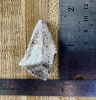
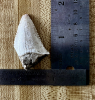
Hi, my wife found this years back while hiking near Figueroa Mountain. I just realized we've never tried to have it identified. To me it looks like a large shark tooth similar to a great white. I don't know if it's actually a fossil of something that lived in that area or what. It was semi-buried in the clay like soil and my wife poked at it because of the triangular shape.
Curator Response
Hi Tom,
It’s typically easier to tell if something is fossilized in person, so we will explore some possibilities for you below. If you’d like to make an appointment to bring the tooth in and show it to a curator, you can reach out to Dibblee Curator of Earth Science Jonathan Hoffman, Ph.D., at jhoffman@sbnature2.org.
If this tooth is a fossil, it’s likely from a Miocene Era marine sedimentary rock out of the Monterey Formation. (You can read more about that and other local formations on our Handy Rock & Fossil Facts page.)
If it was not fossilized, we can suppose that humans brought it to the mountain. Archaeologists use the term “manuport” to describe natural objects moved but not modified by humans.
In traditional Chumash cultures shark teeth may be used as tools, such as for punching leather, but it does not appear from your photo that this tooth has been worked as a tool. It’s possible that this tooth was an unintentional manuport that came along with other marine material imported from the coast. Surprising as it seems, Chumash people brought bivalves (clams, mussels, scallops, and oysters) great distances inland to eat and use. Bivalves are perfect little protein packages in their natural protective containers! (However, we don’t recommend transporting seafood this way today.) A shark tooth may have hitched a ride with these.
Stay curious,
Curatorial Assistant Allison Jaqua, M.A., and John Johnson Chair of Anthropology Justin Lemberg, Ph.D.