This Clam Wants Your Vote
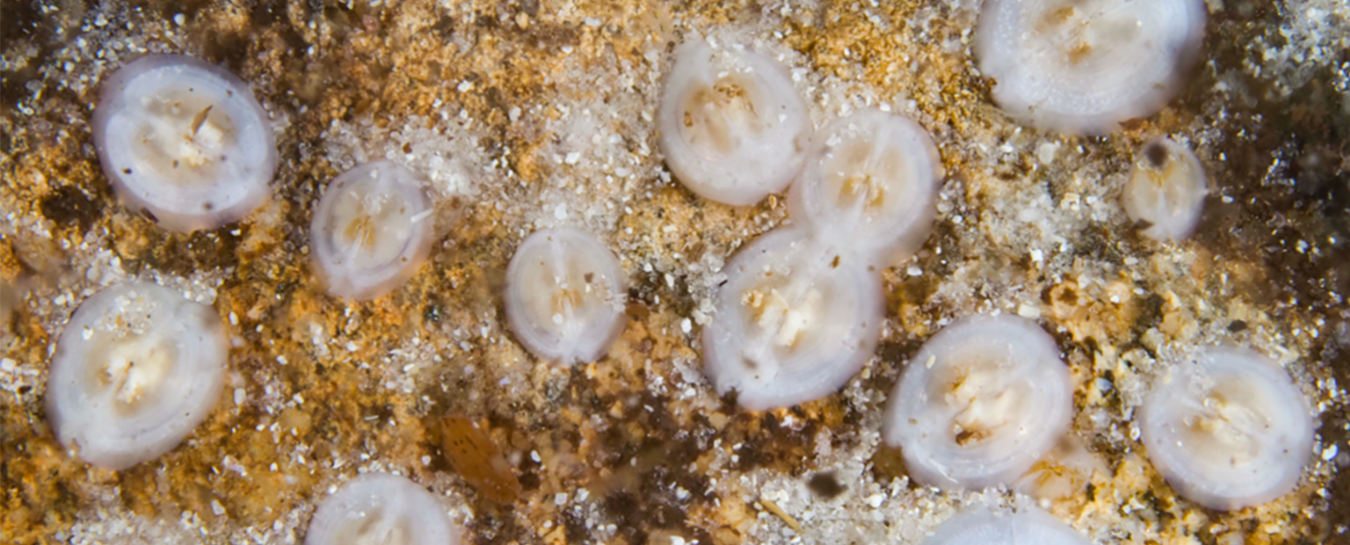
The female Mysterious Moon Clam glides through life with the two parts of her shell wide open and the tiny male clam riding along on her back. She moves with surprising agility through dark sponge galleries and shrimp burrows. This enigmatic, charismatic species is among the top five animals in the running for International Mollusc of the Year. Scientists here at the Museum hope to secure your vote and win free gene sequencing to better understand how the wide-open clam evolved.
The Museum’s Department of Invertebrate Zoology is home to collections and expertise that extend far from Santa Barbara itself, particularly all around the Pacific Rim. The Mysterious Moon Clam (Ephippodonta lunata) lives along Australia’s temperate southern coast. SBMNH Curator Emeritus of Malacology Paul Valentich-Scott is the senior member of an international band of researchers focused on the wider group to which the Mysterious Moon Clam belongs. They study the galeommatids, tiny clams with a wide variety of strange lifestyles. On a recent research trip to European museums, they found over 50 new species in the group just waiting to be discovered in museum collections. Several are closely related to the Mysterious Moon Clam.
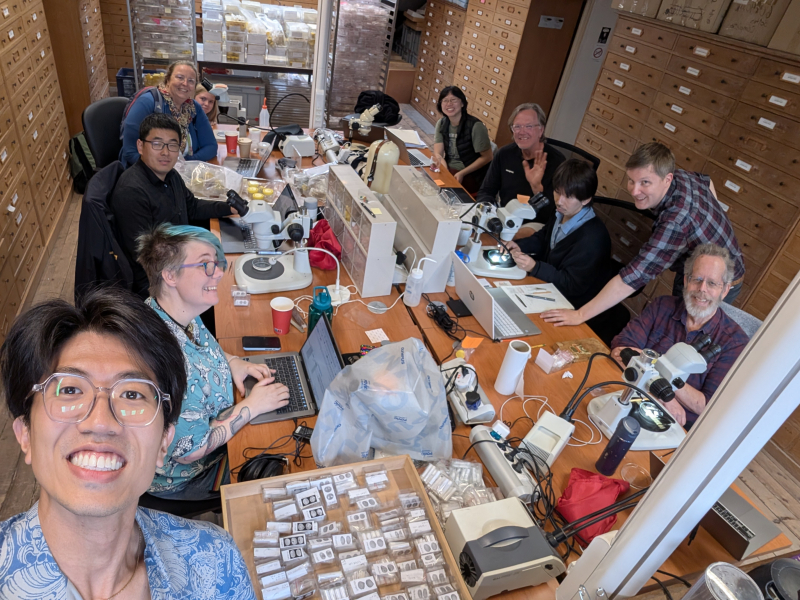
Researchers in the international Galeommatid Group—shown here studying clams at Muséum national d'Histoire naturelle in Paris—are mustering votes for the Mysterious Moon Clam. Valentich-Scott of SBMNH is at right. Photo by Andy Tan
“This unusual clam thinks it’s a snail, crawling under rocks and into crevices with its two-part shell wide open,” says Valentich-Scott. “If we can sequence the whole genome of this fascinating bivalve, it will open up the door to our understanding of how, when, and why this unusual lifestyle developed.” From April 13 to 25, anyone can vote and lend their support to the clam.
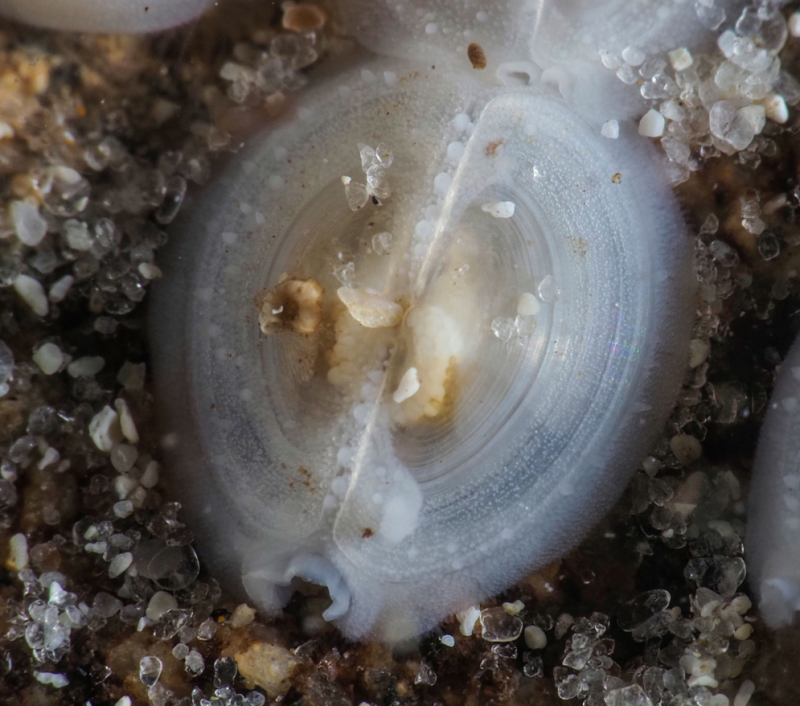
Female Mysterious Moon Clam spreadeagled on a rock. Photo by Henry Carrick
International Mollusc of the Year is a competition run by the Senckenberg-Leibniz Institution for Biodiversity and Earth System Research (SGN), a major research institution in Germany. Mollusks (or molluscs as they are spelled in Europe, hence the name of the contest)—are a group including snails and slugs; octopus, cuttlefish, and squid; bivalves like clams, oysters, scallops, and oysters; as well as lesser-known animals like chitons and tusk shells.
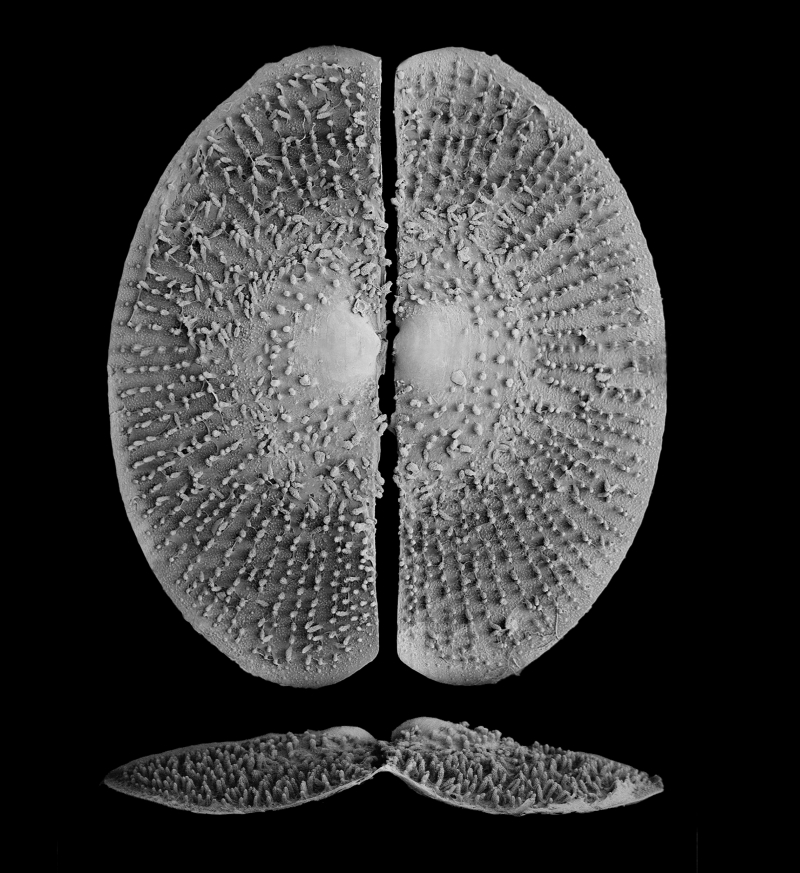
This scanning electron microscope image of a Mysterious Moon Clam specimen at the Western Australia Museum shows delicate sensory structures on the outside of the shell. Image by Peter Middelfart
The researchers are hoping that their broad international roots will help earn the Mysterious Moon Clam the status its unique lifestyle deserves. “I think we can unite voters from Australia, the United States, United Kingdom, Canada, China, Japan, and New Zealand to care about galeommatids and get this genome sequenced,” says University of Colorado Boulder Associate Professor Jingchun Li, Ph.D., another leading scientist in the research group.
Learn about all the candidates for International Mollusc of the Year on SGN’s website, and vote here.
Top photo of a large group of Mysterious Moon Clams on a rock by Henry Carrick




0 Comments
Post a Comment