New Curator of Historical Prints
an interview with Maximus Gallery Curator Sarah Monks, Ph.D.
Owen: You've written quite a bit about the historical relationship between art and the sea. Why is that?
Sarah: I started my museum career at the National Maritime Museum (NMM) in London, before doing my Ph.D. thesis on eighteenth-century British seascape imagery at the Courtauld Institute of Art. I've since taught and written about the history of British colonialism for years, and obviously the sea is a huge part of that history.
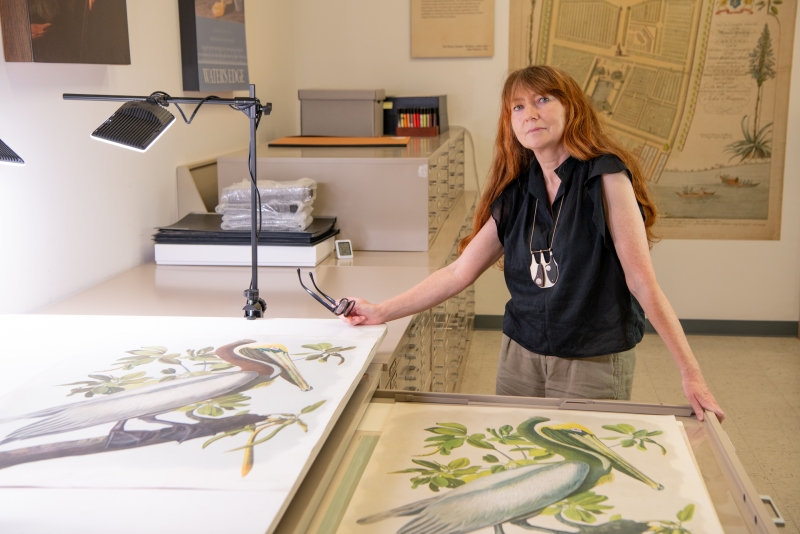
Maximus Gallery Curator Sarah Monks, Ph.D., shares two versions of John J. Audubon, Brown Pelican in the collection. The print on the right has faded, while that on the left retains vivid red-browns.
Owen: What was your role at the NMM?
Sarah: I curated the art collections there: 65,000 works of art spread across a massive, multi-site campus. At that time, there weren’t many curators, so it gave me a broad experience of how museums operate—across collections, education, display, marketing, and so on. One of the things I’m most proud of doing there is leading one of the earliest contemporary art initiatives within a history museum. We commissioned sound artist Bill Fontana to go around the coast of England, and we put speakers in the ground in the main entrance to play the recordings he’d made at the shoreline, so that the sound created a kind of threshold to a new place. I believe it’s still going. We installed that at the beginning of a wave of connection between contemporary artists and historic collections that’s really carried on and grown.
Owen: You’ve curated and written about painting, sculpture, and as you say, even sound. Do you feel limited by the tighter scope of natural history illustration prints?
Sarah: No! There’s much more to these prints than meets the eye. One of the things that’s really surprising to people is how much it cost to make many of these prints. Large engravings were an investment equivalent to about $25,000 today. I’m interested in the commercial aspects of that, and how artists were seeking to satisfy and shape the tastes of a certain marketplace.
Another thing—today we tend to think of an illustration as supplementary, just nice to have. From the fifteenth century through to the early twentieth century, scientific illustrations were absolutely crucial; they are the proof. You can write anything you like, but if you can't depict the thing accurately and someone else can, they win. The images were made within a competitive arena—the natural sciences as they emerged—that could be pretty cutthroat.
Owen: You spent a decade sharing this kind of cultural context not only with museum guests, but with students. You were a teacher inside a museum. How did that work?
Sarah: I was a professor at the University of East Anglia, in the UK, where my office was right in the heart of the Sainsbury Centre for Visual Arts and where I taught art history and museum studies. It's a very groundbreaking museum, built on a playful concept. It's like a huge aircraft hangar containing artifacts from pretty much every culture around the world. There's very little in the way of architecture to divide up the collection, and the curators have mobile walls. You see right into the collections, and it's up to the visitor to decide how to draw connections between objects. There was a curatorial ethos of working with colleagues and students to put together shows based on connections in this huge collection. I had many fantastic graduate students during my decade there.
Owen: What brought you to the Central Coast?
Sarah: After fifteen years of teaching, I decided I wanted fresh challenges and that I needed to switch things up a bit. My husband is Californian, so it made sense for me to move here.
Owen: And to the Museum specifically?
Sarah: Before I came here, people told me about this museum. People who know it absolutely love this place. Even if they've only been here once, they're like, “I love that museum.” Obviously, there's a lot of affection. I can see it here daily, hour by hour, visitors coming past—children, parents, grandparents, groups of young people—just sauntering through and soaking it in. It’s clearly a place that people really cherish. It's also been wonderful to see how well the museum is supported by the community, and how that allows important research to take place.
Owen: Do you plan to continue with your own research alongside curation?
Sarah: I want to continue publishing my own research here for sure, as well as coordinating events that bring researchers together. This is a great time for researchers to engage with the natural history print collection, because the environmental humanities are huge. There are so many young scholars now working on precisely the kind of images and histories that this collection deals with. Santa Barbara is the right place for it as well, because UCSB is the birthplace of environmental studies. The humanities departments here have great scholars of literature, philosophy, art, and history, all picking up on environmental themes that speak to the present moment. That’s really exciting to me.
Owen: Is your thing for the sea going to continue here?
Sarah: Possibly. I would love to do a show about the representation of the shell within natural history and how it impacts the arts. I’m an eighteenth century person by heart, and the shell is a key form in the transformation of aesthetics and design that occurs in the mid-eighteenth century with Rococo. Compared to what people had understood to be the norm of classical forms, the shell is very playful. Shells are so diverse, there’s an entire universe of possibilities for artists. And obviously this is one of the great strengths of our Invertebrate Zoology Collections.
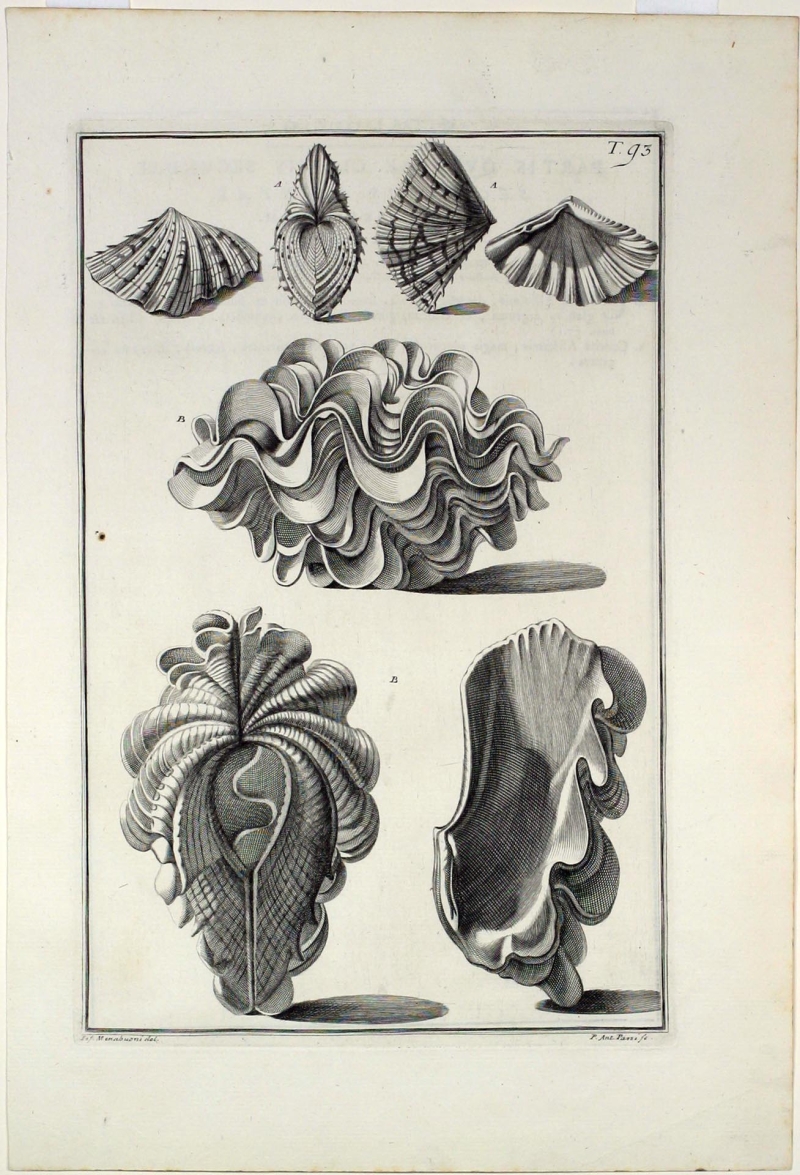
Pietro Antonio Pazzi after Giuseppe Menabuoni, Giant clams, plate 93 from Niccolo Gualtieri, Index Testarum Conchylorum… in Museo Nicolai Gualtieri [Catalog of the Shells preserved in Niccolo Gualtieri’s Museum ] (1742, engraving)
Sarah: I’m really looking forward to curating exhibitions with the curators in other departments. The small size of this museum actually makes it easier to have those interdisciplinary conversations. I've also been thinking about curating an exhibition on the history of fossil collection and the concept of extinction, perhaps with our Dibblee Curator of Earth Science Jonathan Hoffman. Curator of Mammalogy Ally Coconis and I have been talking about doing a show about how small mammals like the opossum and the beaver have shaped America and its global identity.
Owen: You’re stepping into a role that’s basically synonymous with the curator who held it for nearly as long as the department has existed—Linda Miller.
Sarah: Linda developed this department from quite small foundations into a collection that does a lot of interesting things, and covers Audubon particularly well. Because that history is well-documented, I can look in her files and see all the images of these extraordinary, beautiful shows she put together, covering a really diverse range of topics. Linda has established an excellent framework for the Maximus Gallery, and I'm very grateful that I don’t need to build one from scratch. My job now is to continue that framework while allowing it to grow and evolve.
Owen: Now people can come and see how you’re excelling at that.
Sarah: Yes, please come to the gallery. The new show is Selby’s Circles: Art & Nature in Romantic Britain. It’s about Prideaux John Selby—sometimes called a British Audubon—a nineteenth-century artist-naturalist whose work is intriguing. He's been largely overlooked and this is the first museum exhibition devoted to him.
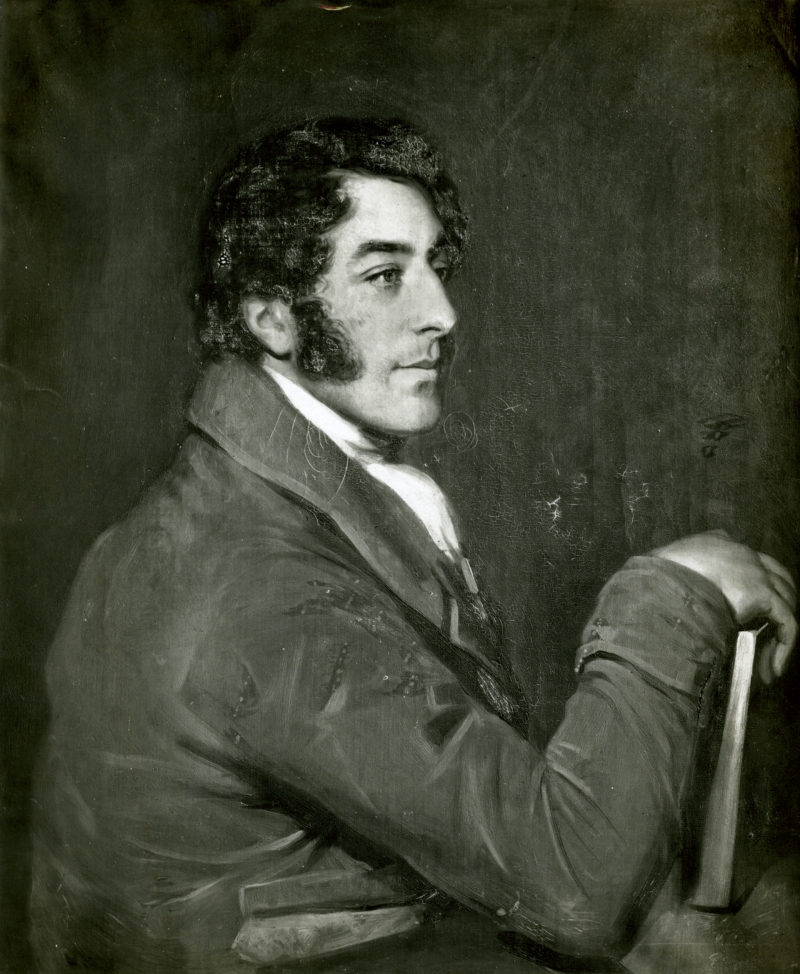
Edward Hastings, Prideaux John Selby (c. 1820, oil on canvas, unlocated; photo by Donald Macbeth c/o Natural History Society of Northumbria)
Learn more about the John and Peggy Maximus Art Gallery and the Museum’s historical print collection.
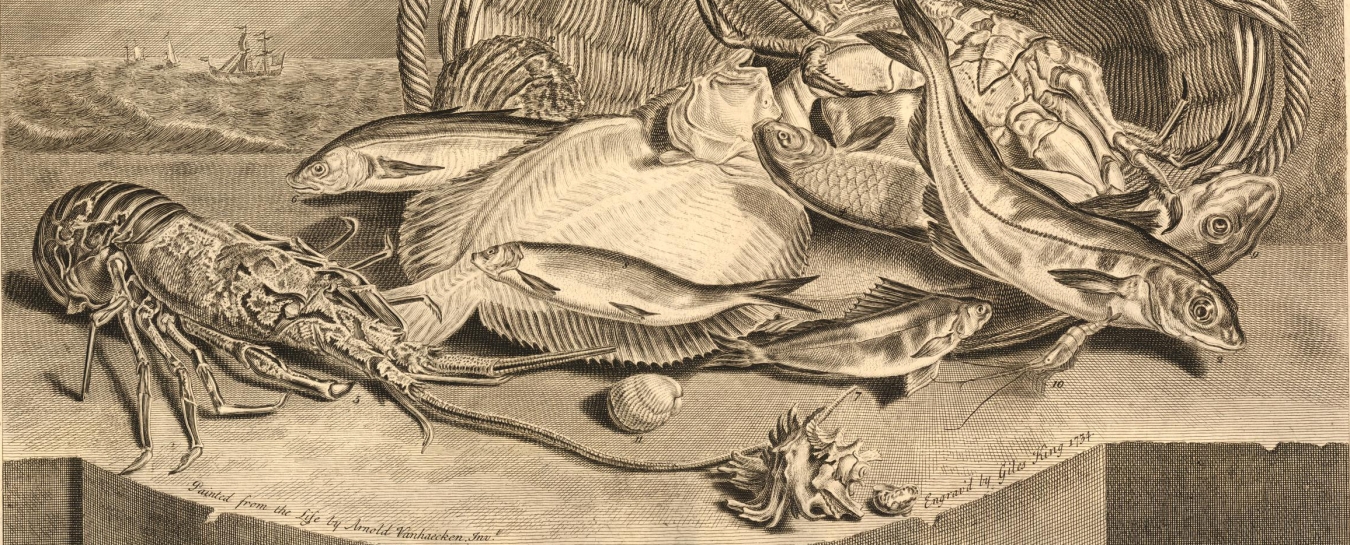
Top image: Giles King after Arnoldus van Haecken, Still life of fish before a seascape, plate 3 from Wonders of the Deep (1734, engraving, British Museum) © The Trustees of the British Museum. CC BY-NC-SA 4.0


0 Comments
Post a Comment