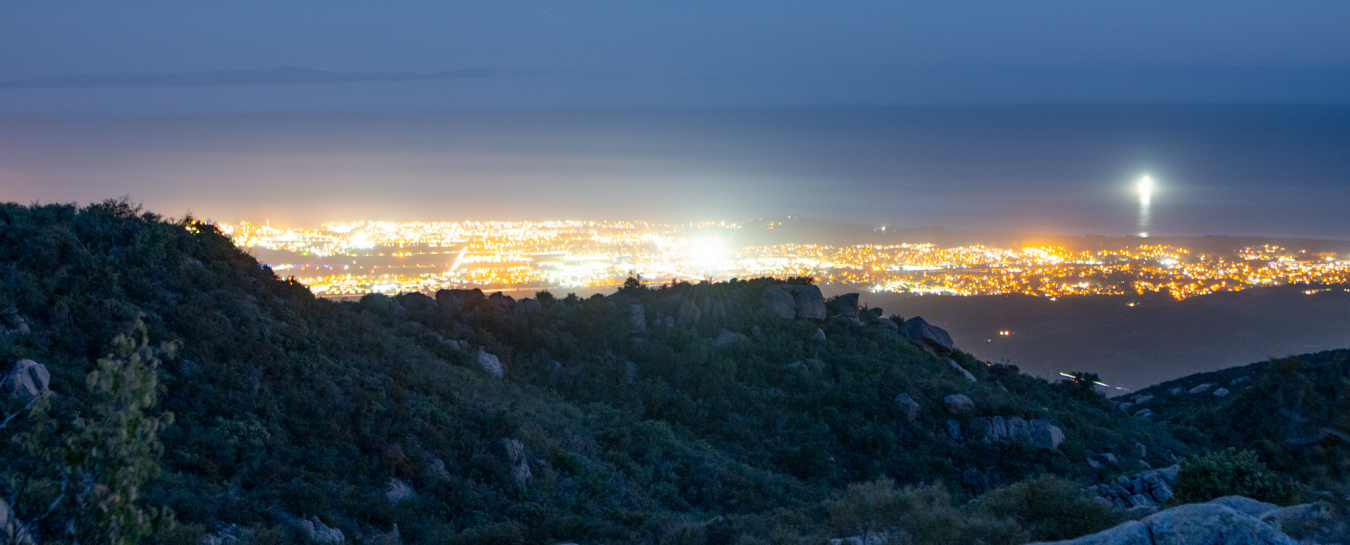
Why We Hate Light Pollution and How We Can Stop It
“Light pollution has such wide-ranging impacts that there is something for everyone to hate about it,” says Mike Wondolowski, a local advocate for dark skies. He’s absolutely right. Wasted light in the outdoors causes a host of side effects for everyone.
Light Pollution Harms Humans
Artificially bright skies at night are bad enough for backyard astronomers, but light pollution hides the universe from everyone. It steals opportunities to feel wonder, romance, and a sense of place. We’re robbing ourselves as we pay for the energy wasted polluting our own skies. Bright lights are often erected with safety in mind, but the evidence shows that over-lighting works against safety by illuminating targets for crime while making it harder to see who’s in the shadows. Finally, many of us know the frustrating experience of trying to fall asleep with a light source we can’t control blazing through cheap curtains or creeping around our blinds. It’s not just annoying—artificial light disrupts our circadian rhythms. Researchers are working to understand the human health risks of exposure to artificial light at night.
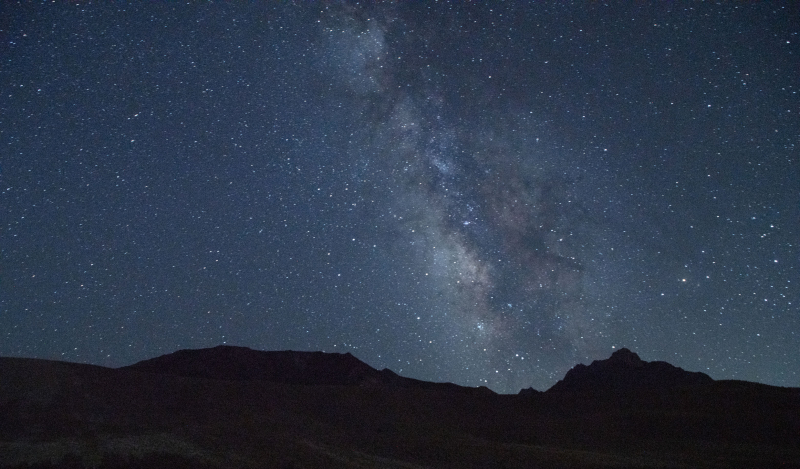
When was the last time you saw the Milky Way? The edge of our galaxy is still out there, but most of the time there’s too much light pollution to see it.
Light Pollution Harms Plants & Animals
Animals around the world rely on moonlight, starlight, and darkness to reproduce and survive. Famously, artificial light can leave sea turtle hatchlings shuffling in circles and puts off their moms from nesting. Male frogs prefer calling their mates from dark spots, so light pollution exacerbates amphibian habitat loss. Closer to home, artificial light can harm migrating Monarch butterflies by triggering them to fly when they’d normally be resting. It can derail the navigation routes of migrating birds. Light pollution impacts the hunting behaviors of nocturnal predators, and foils the hiding of their prey. Artificial light can both attract and repel insects in ways that imbalance the food web. Some insects that pollinate plants at night make fewer visits to artificially lit areas, reducing food production. Artificial light at night can also directly disrupt the rhythms of plant growth. These effects have concerning implications for agriculture. And if you like breathing as much as you do eating food, well, artificial light at night extends allergy season, too.
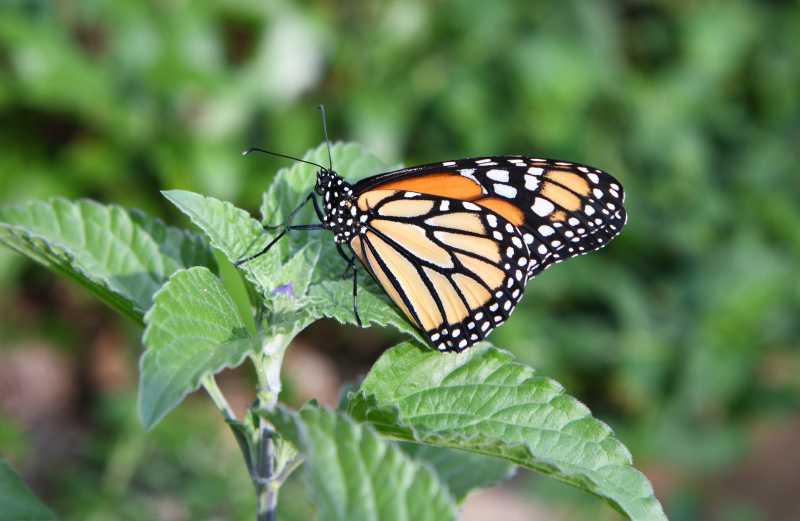
Your lights could be overstimulating everyone's favorite butterfly. Give ‘em a break.
How You Can Fight Light Pollution
Unlike air, water, and soil pollution, light pollution is easy to stop. You don’t have to be a homeowner to help, either—just advocate for responsible outdoor lighting where you live and work. This lighting serves a clear purpose, is targeted to where it is needed, is no brighter than necessary, is on only when needed, and is warm-colored.
Lowest effort, cost savings: Turn off your outdoor lighting when you don't need it.
Low effort and cost: Replace bulbs to lower the lumen level (300 lumens is enough for pathways) and go for a warm or amber-toned correlated color temperature (CCT 2700K or lower is best).
Moderate effort and cost: Make sure your light fixtures are shielded properly, directing light to where it’s needed, not spilling pointlessly into the sky. Install timers or sensors so lights shine only when you need them.
Be a dark skies star: Tell your friends and neighbors what you did and why you did it.
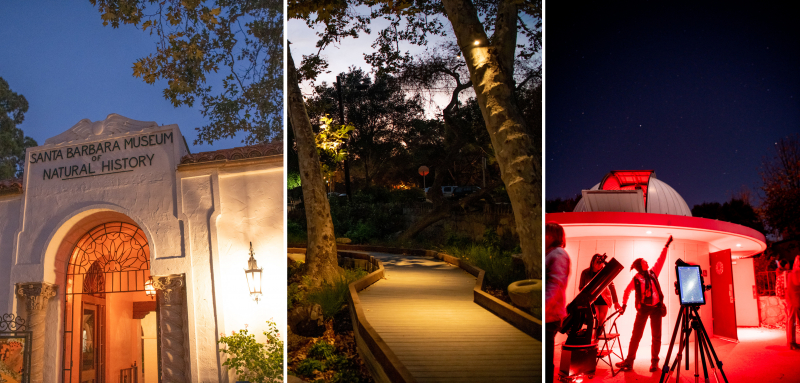
Left: Historic fixtures at the Museum leak light up, but we can keep the lumens low and temperature warm. Center: Newer fixtures are directed sharply downward at the path where lighting is needed. Right: Keeping lighting directed, low, and warm allows us to see the stars from Palmer Observatory.
Let’s Share the Benefits of Darker Skies
The silver lining to all the hateable features of light pollution is that it’s easier for people to agree on the solutions above. That’s why Wondolowski was able to rapidly organize support for fighting light pollution among the Santa Barbara Museum of Natural History, the Santa Barbara Astronomical Unit, the Santa Barbara Botanic Garden, WE Watch, the California Nature Art Museum, the Astronomy Club of Lompoc, the Goleta Valley Historical Society, the Santa Barbara Audubon Society, and the Carpinteria Valley Association (of which he is the president). Light pollution hurts us all, so together we advocated for local recognition of International Dark Sky Week (April 13–20). In response, the Santa Barbara County Board of Supervisors and the Cities of Carpinteria, Santa Barbara, Goleta, Buellton, Solvang, Santa Maria, and Guadalupe all issued proclamations recognizing the week and encouraging the community to “reduce light pollution, use responsible lighting practices, and take time to appreciate the natural beauty of the night sky.”
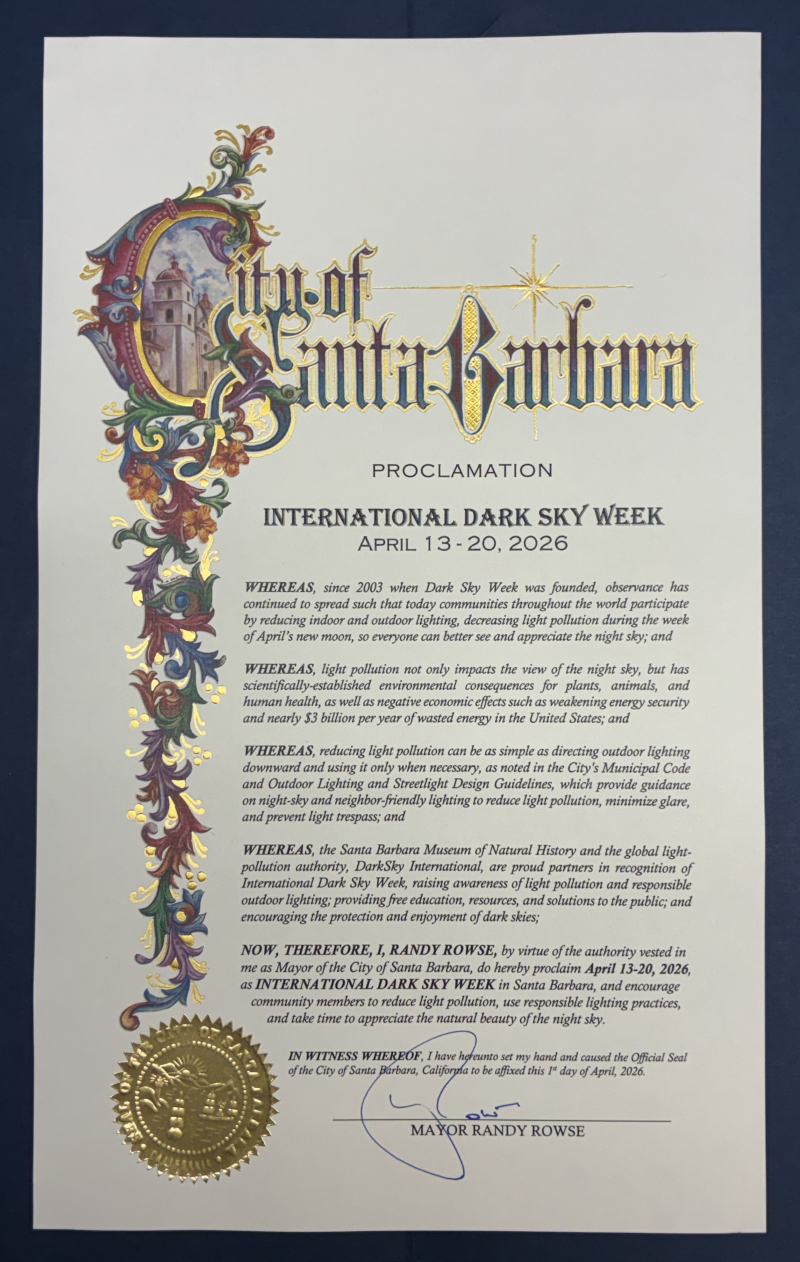
The Museum was stoked to receive a special shoutout in Mayor Randy Rowse’s proclamation. Photo by Mike Wondolowski
We’re grateful to Wondolowski, our local elected officials, and fellow nonprofits for leading on this issue that affects us all. But you know what would be even more awesome? Seeing a wave of grassroots action that leads to meaningful reduction in local light pollution...and being able to show you some more stars and galaxies during our free Star Parties as a result!
Volunteers with the Santa Barbara Astronomical Unit prepare for a monthly Star Party at the Museum.
For more information about International Dark Sky Week and tools for making your lights dark-sky friendly, visit darksky.org.




1 Comment
Post a CommentWe are creating procedures to stop light pollution here in Fairfield, Iowa. We want to watch how you are doing it. Great article and best wishes for your success.