The Natural History of Our Native Bees
While most people think of honey bees when they think of the word “bee,” the sheer diversity of bees is deeply underappreciated. While honey bees are famously eusocial animals (like ants) with complex caste systems that construct communal hives that may consist of thousands of individuals, this is not true of all bees. A vast majority of bees—as much as 75%—are actually solitary. In fact, more species are parasitic than social, cleverly exploiting other species to raise their own offspring.
In solitary bee species, males compete to mate with an independent female that constructs a nest and provides for her offspring all on her own. Unlike the grand, iconic hives of some honey bees, most bee species live in relatively humble nests in the ground, or borings in wood and plant stems. There are approximately 20,000 species of bees globally and nearly a hundred can be found locally here in Santa Barbara. Fluffy black and yellow bumblebees can be often seen buzzing from flower to flower carefully packing pollen into leg “pockets” called corbicula. Shimmering metallic green sweat bees, with specialized velcro-like hairs for gripping pollen called scopa, may be found sleeping soundly within flowers. Large carpenter bees, named for their ability to painstakingly excavate nests in wood, have iridescent black abdomens reminiscent of oil slicks. Bees are incredibly diverse little creatures with a fascinating natural history. We are fortunate to share our planet with bees and it’s up to us to protect them from the rising dangers in the Anthropocene.
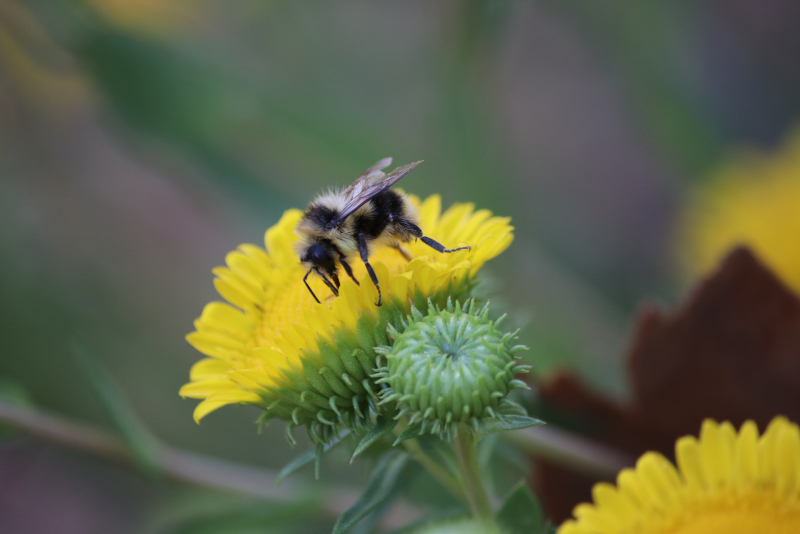
Bombus melanopygus on a Gum Plant at Santa Cruz Island. Photo by the author
The story of bees began long before one might expect. Bees arose during the dawn of flowering plants in the Cretaceous Period, buzzing across the undergrowth in the shadows of dinosaurs. They witnessed an apocalyptic mass extinction yet managed to live to tell the tale tens of millions of years later. It may be surprising to learn that bees are actually derived from predatory wasps who preyed upon herbivorous, flower-dwelling insects. At some point they accidentally developed a taste for protein-rich pollen and adopted a vegan diet. The transitional forms between wasps and modern bees have been eternally preserved in prehistoric amber as they became increasingly entangled with flowering plants.
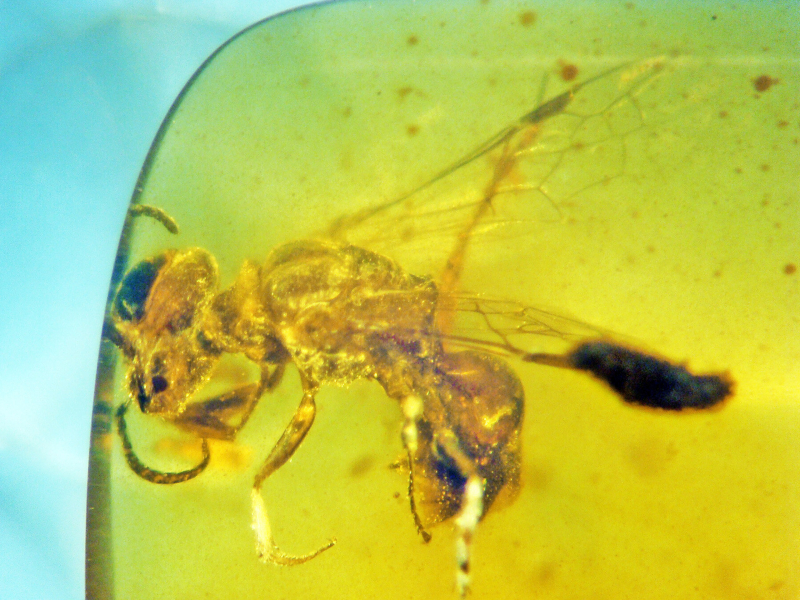
Early bee Discoscapa apicula preserved in mid-Cretaceous amber. Photo by George Poinar Jr., OSU College of Science
Just as the scales of the reptilian predecessors of dinosaurs gave rise to avian feathers and flight, once-carnivorous wasps became woolly to bear yellow blizzards of pollen. As early bees foraged on pollen, they would accidentally deposit pollen grains on neighboring flowers, assisting them in reproduction. Pollination allowed for the colorful explosion of flowering plants in the Cretaceous, propagating across the ancient landscape when mighty creatures like Tyrannosaurus and Triceratops roamed. For over 120 million years, bees have maintained this symbiotic relationship with the vibrant flowers of the world. Our planet likely wouldn’t look the same without the evolution of bees.
Bees have been a part of human history since humanity emerged from the continent of Africa over 300,000 years ago. Humans have prized the rich honey produced by honey bees for millennia. A species of bird native to sub-Saharan Africa called a Honeyguide has evolved a mutually beneficial relationship with humanity, deliberately leading hunter-gathers to bee nests to share the harvest of honey and wax. This relationship—which persists to this day—is even speculated to precede the evolution of modern humans and may have first emerged in early hominins of the Pliocene. The earliest evidence of honey bee domestication was in ancient Egypt, where depictions of beekeeping have been found in the temples of pharaohs. Even the “Father of Genetics,” Gregor Mendel, was an avid beekeeper at his monastery, affectionately referring to them as his “dearest little animals." Bees are intrinsically woven into the fabric of humanity, bringing us prosperity and even joy across countless cultures for generations.
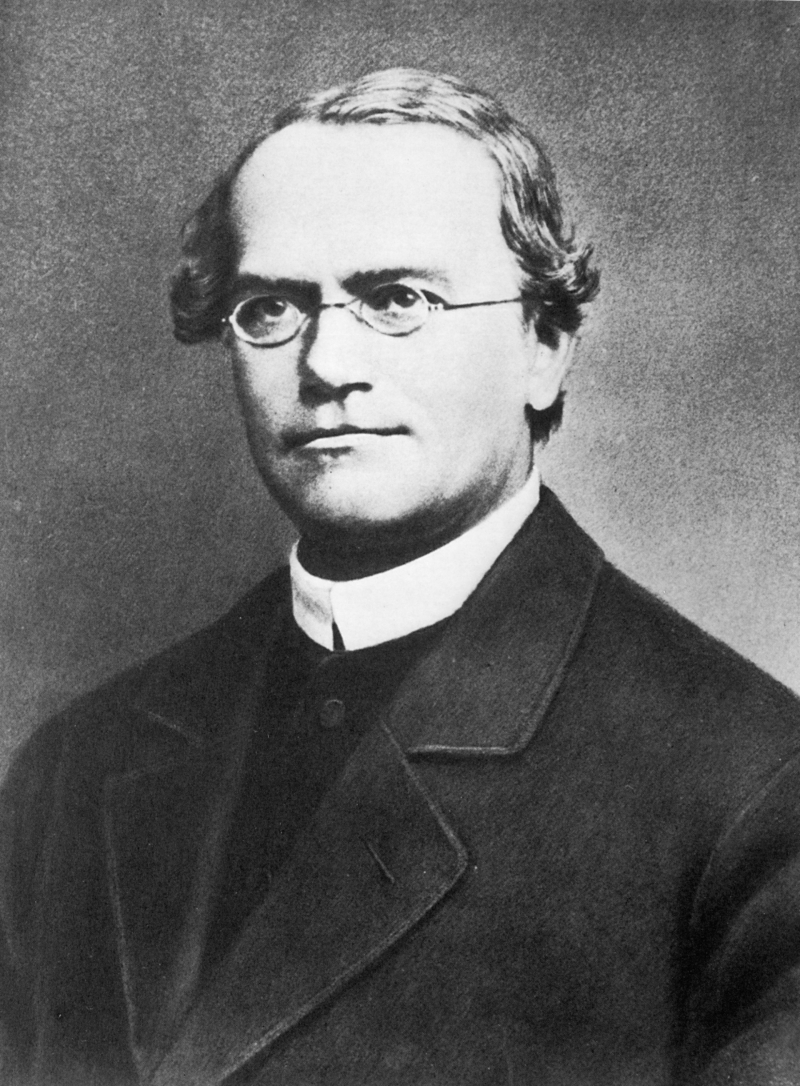
Gregor Mendel, father of genetics and lover of bees
Humanity’s relationship with bees extends far beyond our historical sweet tooth for honey. According to the UN’s Food and Agriculture Organization, a third of the world’s food supply depends on pollinators like bees. It is estimated that pollinators improve global crop output by a whopping $235 to $580 billion annually. In the United States native insect pollinators contribute to more than $57 billion dollars. Honey bees alone are estimated to contribute almost $12 billion to United States agriculture. Bees are crucial for pollinating many of our most beloved crops like apples, almonds, avocados, blueberries, cucumbers, and tomatoes. Honey bees are often deployed by beekeepers to pollinate millions of acres of farmland. Some species of bumble bees are even commercially managed to pollinate greenhouses, while glistening blue mason bees are managed to pollinate orchards. The economic significance of bees in our modern world simply cannot be overstated.
Concerningly, bee populations have been rapidly declining in recent years due to varying factors. The widespread agricultural use of pesticides—lingering chemical poisons that bleed through the environment—has decimated insect populations, including bees. Numerous pests and pathogens plague bees, including hive infestations of festering fungi or parasitic mites—vectors of viruses that leave bees with debilitating deformities, often leading to the collapse of entire colonies. Bees must also shoulder the consequences of climate change; drought and heat stress, premature emergence in erratic winters, and unpredictable effects on complex sociality. The most prominent threat to native bee species, however, is habitat loss due to anthropogenic activity. The destruction and degradation of wild bee habitat due to increasing urbanization and the establishment of industrial monocultures threaten native bee species. The fragmentation of habitat has isolated populations to restricted ranges with limited resources for survival. Habitat loss also threatens the delicate balance between endemic plants and bees. As 75% of the world's flowering plants rely on pollinators like bees, the cascading effects of declining bee populations may have cataclysmic consequences on our planet's ecosystems.
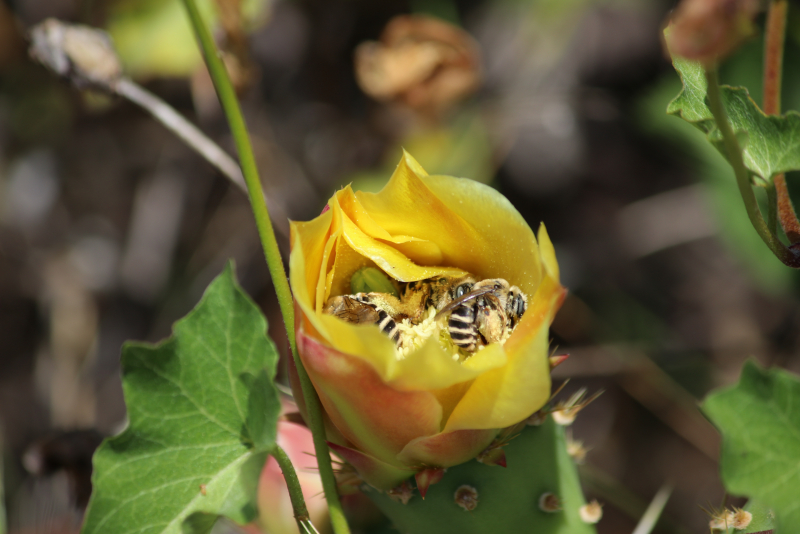
Diadasia rinconis cactus bees—appropriately inside a cactus flower—on Santa Cruz Island. Photo by the author
While honey bees are highly productive for human agriculture, both as commercial crop pollinators and producers of honey for human consumption, it is important to reconcile their detrimental effects on native bee populations. After all, honey bees are essentially feral livestock in the United States, historically domesticated animals transported to North America for human agriculture. Just as domestic European cattle have displaced native bison on the American prairie, European honey bees displace and compete with native bees endemic to the American continent. The presence of honey bees is largely associated with a decrease in wild bee biodiversity. Studies in Coastal California have shown that honey bees deplete nectar and pollen resources, reducing the reproductive success of native species like bumble bees. Indeed, honey bees are often referred to as super-foragers, deploying thousands of individuals to gather an excess of floral resources to return to a single hive. Largely solitary native bees simply cannot keep up.
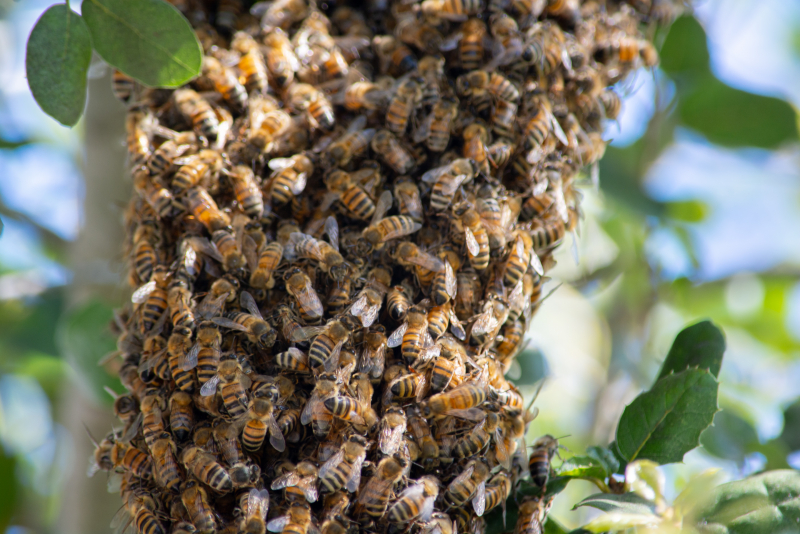
Swarming Apis melliferia honey bees on the Museum grounds. Photo by Santa Barbara Museum of Natural History
Not only are native bees being competitively excluded, but honey bees may actually decrease the reproductive success of endemic plants. While honey bees are highly efficient at extracting nectar and pollen, they are not as effective as native bees at actually depositing pollen for pollination. Unfortunately, there has been growing pressure from some commercial beekeepers to place more honey bee hives in U.S. National Parks and Forests. Further introduction of millions of invasive honey bees in natural habitats may have disastrous effects on already struggling native bee species, not to mention untold consequences on the reproductive success of endemic plants reliant on specialized pollinators. Local beekeeper Melissa Cronshaw has recognized these issues, stating “The best way to support the environment moving forward is not to become a beekeeper and bring in more honey bees. The best practice is to provide habitats and resources for all the pollinators to create a healthy and diverse ecosystem!” It is imperative that we protect our endangered native bees from the invasion of non-native honey bees by supporting native habitats.
Fortunately, there are growing efforts to protect and preserve our native bees. Academic institutions like UC Santa Barbara’s Cheadle Center for Biodiversity and Ecological Restoration are dedicated to the scientific research and the conservation of local ecosystems. At the Cheadle Center, bee researchers are diligently working to investigate pressing questions such as potential physiological responses to environmental stressors or the thermal tolerance of local species amidst climate change. With nearly a hundred native species of bees in Santa Barbara alone, not only are these scientists interested in broadening our understanding of bees but working to protect our local community of pollinators. UC Santa Barbara is a certified Bee Campus USA affiliate, a distinction that signifies a commitment to pollinator-friendly practices with the support of experts backed by the Xerces Society for Invertebrate Conservation. A critical component of UCSB’s Cheadle Center’s work is the restoration of local bee habitats.
The scientific collaboration between entomologists and botanists has given way to remarkable habitat restoration efforts. Ecologists at the Cheadle Center have outlined scientific steps for bee-centric restoration of local habitat. Armed with dusty boots and shovels, restoration ecologists painstakingly remove pesky invasive plants and proudly reintroduce a diverse array of beautiful native flora such as caterpillar phacelia, sawtooth goldenbush, and purple sage. The return of varied floral resources and suitable nesting sites in once-degraded habitats encourages the return of the native bees to forage and reproduce. “Build it and they will come” is the motto of many restoration ecologists. By selecting restoration sites that link fragmented habitats, restorationists create pathways for neighboring bee communities to populate new areas. Such methods target the needs of local species and foster a healthy and diverse bee population. The Cheadle Center has already played a pivotal role in the restoration of coastal grassland in UCSB’s North Campus Open Space (NCOS). The collaboration of botany and entomology experts, as well as invaluable insight from the Indigenous Chumash community, has demonstrated inspiring results. These projects are also meaningful opportunities for university students and ordinary citizens to contribute to real change.
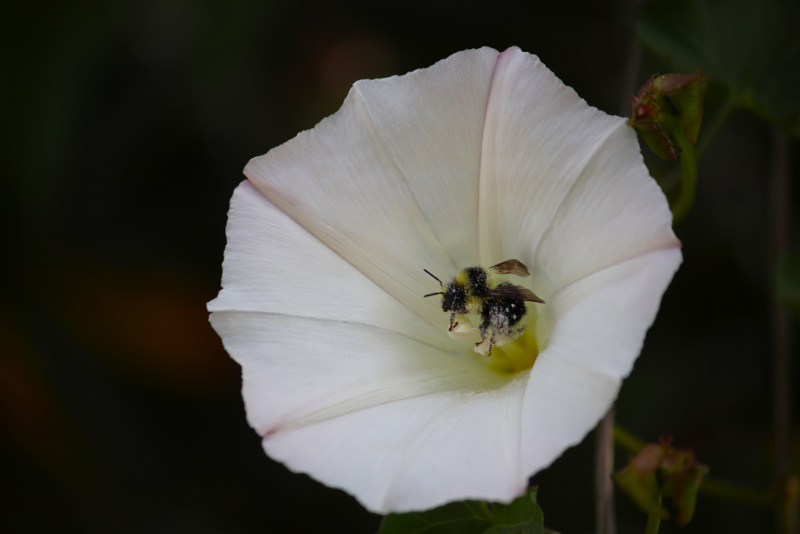
Bombus melanopygus collecting pollen from a native Coast Morning Glory at a Cheadle Center restoration site. Photo by the author
While the industrial forces driving climate change and habitat loss perpetually charge forward, we hold the power to protect native bees in our communities. Local restoration projects are always looking for volunteers to lend a hand. If you are able-bodied and available, there is no better time to tie your boots and grab a shovel. Restoration may even begin in your own backyard. Rather than planting non-native flowers and grass lawns in your garden, opt for species native to your local area. Be sure to avoid wall-to-wall groundcovers and excessive mulching in your garden to leave some patches of bare soil for ground-nesting bees to burrow, and steer clear of pesticides such as Glyphosate, often marketed as Roundup®. It's not easy being green, so if you don’t have a particularly green thumb, being a conscious consumer wary of the greenwashing spouted by the honey industry is an important step in ensuring native pollinators get the spotlight they rightfully deserve. In the turbulent political climate of our time, our native bees need advocates—diligent supporters of environmental legislation, scientific researchers in academic institutions, and people willing to make change in their own backyards. The fate of our native bees lies in our hands.
We share this beautiful planet with countless other living, breathing beings that are just as deserving of life and prosperity as we are. The Earth’s vast history has repeatedly taught us just how fragile the world’s biosphere is. The story of life on our planet is also a story of extinction. It is no coincidence that each mass extinction in geological history coincided with drastic changes in climate. Massive greenhouse gas emissions once resulted in the loss of 90% of all species on Earth in the Permian and we are rapidly approaching the next great die-off. Human activity—chiefly the activities of corporations polluting our planet and stripping the Earth of all its material worth—has gravely altered the natural world. As populations of bees and other vital pollinators plummet with untold ecological consequences, we may be facing the next mass extinction due to cataclysmic man-made change. It's natural to question whether it is already too late to save the endangered fauna and flora of our times. While it can be easy to become overwhelmed and give up the battle for biodiversity, it is always worth fighting to save our earthly kin. Every mass extinction has been followed by mass radiations of new life across the planet. Just as saplings sprout from the ashes of a forest ravaged by wildfire, no matter the damage done to the planet, recovery is possible. If bees could survive a six-mile-wide asteroid colliding with the surface of the Earth with the explosive force of billions of atomic bombs, then—with a little help—they can certainly survive us.
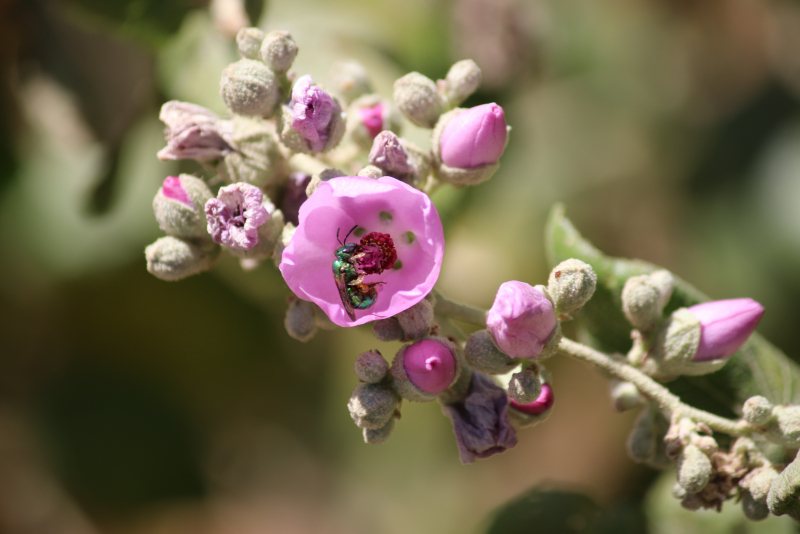
Augochlorella sweat bee inside a mallow flower on Santa Cruz Island. Photo by the author
None of us could save the bees—nor the planet—alone. There is a vast community of scientists and advocates across the globe striving to protect and preserve Earth’s flora and fauna. It is our collective responsibility to make our own contributions and be a small part of that selfless community. There is a valuable lesson to be learned from the humble little bee diligently collecting pollen from thousands of flowers a day—unaware of its role in breathing life into the entire ecosystem.
About the Author
Jorge De La Cruz is a recently graduated zoology major from UC Santa Barbara, where he researched bees at the Cheadle Center for Biodiversity and Ecological Restoration. A Southern California native, his passion for zoology and evolution stems from a childhood visiting the Natural History Museum of Los Angeles County and the Los Angeles Zoo. He is currently president of the UCSB chapter of the Ecological Society of America SEEDS program for providing hands-on experiences to underrepresented students in the field of ecology. He recently received the NSF Graduate Research Fellowship award and will begin a Ph.D. in integrative biology at UC Berkeley, co-advised by Rauri Bowie, Ph.D., and Jim McGuire, Ph.D., at the Museum of Vertebrate Zoology. His doctoral research will focus on wing evolution and the ecological factors driving morphological adaptation.
Further Reading
Diller, C., Castañeda-Zárate, M., & Johnson, S. D. 2022. “Why honeybees are poor pollinators of a mass-flowering plant: Experimental support for the low pollen quality hypothesis.” American Journal of Botany, 109(8), 1305–1312.
Grozinger, Christina, and Harland Patch. The Lives of Bees: A Natural History of Our Planet’s Bee Life. Princeton University Press, 2024.
Henríquez-Piskulich, Patricia, Andrew F. Hugall, and Devi Stuart-Fox. 2024. “A Supermatrix Phylogeny of the World’s Bees (Hymenoptera: Anthophila).” Molecular Phylogenetics and Evolution 190 (January):107963.
Khalifa, Shaden A. M., Esraa H. Elshafiey, Aya A. Shetaia, Aida A. Abd El-Wahed, Ahmed F. Algethami, Syed G. Musharraf, Mohamed F. AlAjmi, et al. 2021. “Overview of Bee Pollination and Its Economic Value for Crop Production.” Insects 12 (8): 688.
Mullin CA, Frazier M, Frazier JL, Ashcraft S, Simonds R, et al. 2010. “High Levels of Miticides and Agrochemicals in North American Apiaries: Implications for Honey Bee Health.” PLOS ONE 5(3): e9754.
Oldhan, Jennifer. “Will Putting Honey Bees on Public Lands Threaten Native Bees?” Yale Environment 360, September 15, 2020.
Ostwald, M. M., da Silva, C. R. B., & Seltmann, K. C. 2024. “How does climate change impact social bees and bee sociality?” Journal of Animal Ecology, 93, 1610–1621.
Page, Maureen L., and Neal M. Williams. 2023. “Honey Bee Introductions Displace Native Bees and Decrease Pollination of a Native Wildflower.” Ecology 104(2): e3939.
Payne, Helen E., Susan J. Mazer, and Katja C. Seltmann. 2024. “Native Bee Habitat Restoration: Key Ecological Considerations from Recent North American Literature.” Frontiers in Ecology and Evolution 12 (August):1358621.
Sottile, Zoe. “California bees can legally be fish and have the same protections, a court has ruled.” CNN (US), June 6, 2022.
Thomson, Diane. 2004. “Competitive Interactions between the Invasive European Honey Bee and Native Bumble Bees.” Ecology 85 (2): 458–70.
“The Buzz on Native Bees” U.S. Geological Survey, June 15, 2015.
Willige, Andrea. “75% of crops depend on pollinators - they must be protected.” World Economic Forum, December 9, 2019.
Wood, Brian M., Herman Pontzer, David A. Raichlen, and Frank W. Marlowe. 2014. “Mutualism and manipulation in Hadza–honeyguide interactions.” Evolution and Human Behavior, Volume 35, Issue 6, Pages 540-546, ISSN 1090-5138.
“The Risks of Pesticides to Pollinators.” Xerces Society for Invertebrate Conservation, Accessed March 2025.
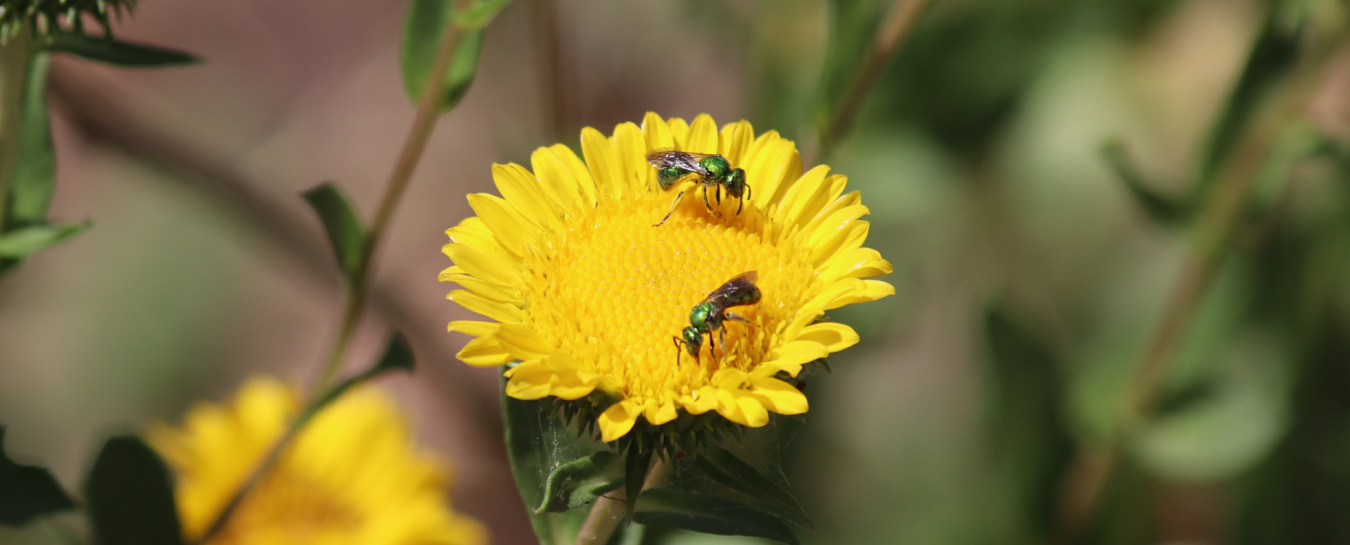
Top photo: Agapostemon or Augochlorella sweat bees on Gum Plant at Santa Cruz Island. Photo by the author




1 Comment
Post a CommentGreat read