Museum Backyard & Nature Center
Ongoing
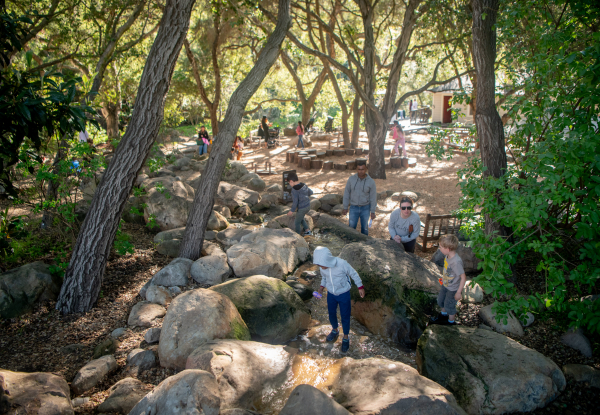
The Museum Backyard is a nature play area nestled in the oak woodland. Entry to the Backyard is included with Museum admission. Members are always free. Many features of the Backyard are ADA accessible; visit our accessibility page for more information.
- Backyard Creek: Our human-made creek in the woods sets a relaxing and playful scene for guests of all ages. Race our wooden boats or make a splash! The creek water is chemically treated to a public pool standard. Please note that the creek goes dry when rainy weather is forecast, for maintenance reasons.
- Eyes in the Sky Aviary: Home to rehabilitated raptors in Eyes in the Sky, Santa Barbara Audubon Society's key wildlife education program featuring birds of prey that can no longer survive in the wild. You can view the birds in their aviary during the Museum's open hours. Within those hours, Santa Barbara Audubon Society volunteers are present to teach guests about the birds Thursday–Sunday, 2:00–4:00 PM. For more information, click here to visit Santa Barbara Audubon's Eyes in the Sky webpage.
- Nature Center: Check out an outdoor exploration kit with tools for observing and documenting wildlife. Get in-person tips on taking part in community science via iNaturalist. An ADA-accessible, all-gender restroom is available. The rest of the center opens June 30.
- Boardwalk: A beautiful elevated walkway winds through forest and creek, making nature accessible to all.
- BioBuilders Zone: Build and create shelter and art, letting the shapes and textures of natural materials guide you.
- Mulch Pile: Get your hands dirty exploring our giant mulch pile for critters.
iNaturalist
Watch the video above to see how easy it is to get started contributing to community science with iNaturalist right in our Backyard! You can help us document the wonderful flora, fauna, and fungi of the Museum. Observations made on iNaturalist on the Museum's grounds will automatically become part of this project tracking the biodiversity of our campus. It already includes over 1,000 observations.